

A "no-start" condition or sudden stalling is a classic headache for any driver, and the Fuel Pump is often the first part to take the blame. But before diving into the diagnosis, you need to recognize the early warning signs.
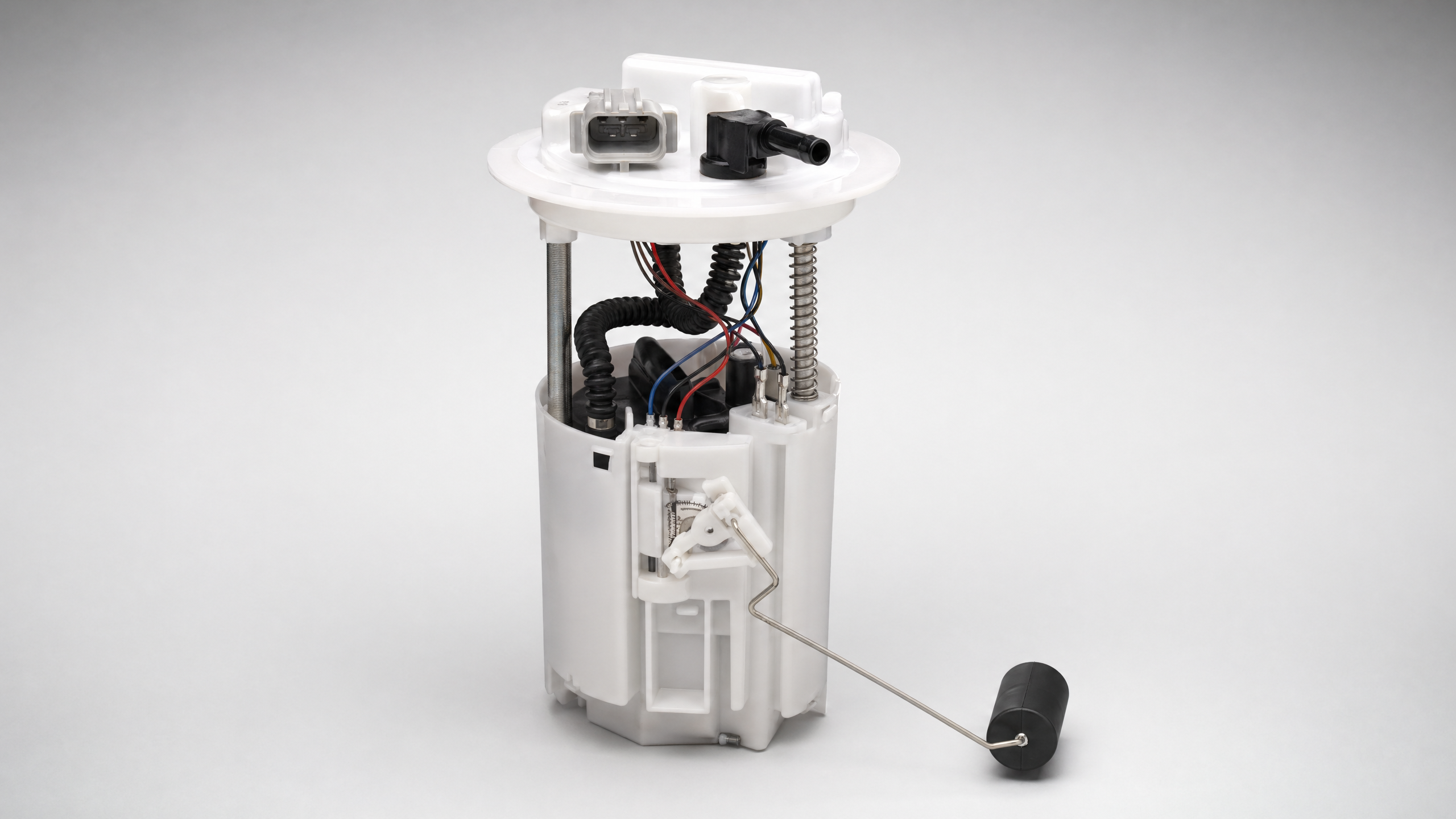
Common Red Flags: Is Your Fuel Pump Failing?
Before a fuel pump quits entirely, it usually leaves a trail of clues. Identifying these early can save you from being stranded on the highway:
- Sputtering at High Speeds: If your 2014 Ford Explorer starts to lose power and then recovers while driving at highway speeds, the pump may be struggling to provide a steady flow.
- Power Loss During Acceleration: If you feel a "lag" when trying to pass another car or climbing a hill in a 2016 Jeep Grand Cherokee, the pump might not be meeting the engine's increased demand.
- The "Whining" Noise: A failing pump often emits a loud, high-pitched whining or buzzing sound from the gas tank area.
- Engine Surging: If your 2015 Toyota Camry feels like it's lunging forward or "surging" even when your foot is steady on the gas, it's often due to irregular fuel delivery.
- The No-Start Struggle: The most obvious sign—the engine cranks and cranks, but without fuel to ignite, it simply won't fire up.
Replacing a high-value component without a proper diagnosis leads to wasted money and high return rates. To ensure a "Unique Correlation"—where the fuel pump is the only remaining suspect—follow this professional 6-Step Precision Diagnostic Protocol.
Step 0: Know Your Limits (DIY vs. Shop)
Before grabbing your tools, define the boundary between a simple swap and a major overhaul.
- The Green Lane: Suitable for DIY if the job involves accessible fuel pump assemblies (like under the rear seat of a 2012 Honda Civic) or external sensors using an OBD2 scanner.
- The Red Alert: Seek a professional if the task involves high-pressure fuel rails (GDI) found in a 2019 Hyundai Sonata, or requires dropping a heavy fuel tank.
- Goal: Match your skill level to the specific mechanical risk of the vehicle.
Step 1: Clear the Environment (Rule Out the Basics)
The engine must be healthy enough to run before you can test the fuel supply.
- Exclude Starting System: Confirm the battery and starter are cranking; if it won't rotate, the issue is electrical, not the pump.
- Exclude Air Intake Path: Inspect the Air Filter for clogs and the Throttle Body for carbon buildup that prevents the engine from "breathing".
- Exclude MAF Sensor: A faulty Mass Air Flow (MAF) sensor sends "garbage data". If the car starts but stalls, try unplugging the MAF to see if it stays running in "Limp Mode".
- Exclude Ignition Misfire (P0300-P0304): Never install a new pump if your spark plugs or coils are failing.
- Exclude Upstream Controls: Ensure the PCV Valve isn't stuck and the EVAP Solenoid is functioning correctly.
Step 2: Let the "Brain" Talk (DTC Analysis)
Use an OBD2 scanner to let the vehicle's "brain" tell you what it sees.
- Code P0087: Low Fuel Rail Pressure—a primary indicator of a failing Fuel Pump or a faulty Pressure Regulator.
- Codes P0171 / P0174 (Lean Mixture): This confirms the engine is starving for fuel, provided the intake path is clear.
- Codes P0101 / P0102: These confirm the problem is the MAF Sensor, not fuel delivery.
Step 3: The "Old School" Senses (Listen & Smell)
Your senses can quickly locate physical failure points.
- The "Hum" Test: Turn the key to "ON" without cranking. If you don't hear a 2-second hum from the fuel tank, the Fuel Pump motor or its relay is likely dead.
- The "Smell" Test: A strong scent of raw gasoline near the engine points to leaking Fuel Injectors or a breached fuel rail.
Step 4: Ironclad Proof (The Pressure Test)
This step provides "ironclad proof" through manual measurement.
- Exclude the Fuel Filter: If pressure is low at the engine but high before the Fuel Filter, the filter is the bottleneck—not the pump.
- Exclude the Pressure Regulator: Use the "Key Cycle" method—turn the key to "ON" several times. If the car starts perfectly after this, your Fuel Pressure Regulator is leaking pressure back to the tank.
Step 5: Matching the Fix to the Failure (What to Buy)
Once the interference is removed, match your evidence to the correct replacement part. For drivers seeking reliable performance, brands like Here we offer top-quality products. offer assemblies designed to match precise YMM specifications.
Diagnostic Conclusion
Recommended Solution
Essential Attachments
- No pump sound / Zero pressure → Fuel Pump Assembly → Fuel Pump Relay, Tank Seal
- Low pressure / Clogged filter → Fuel Filter → Line Clips, System Cleaner
- Pressure OK / Stalling / MAF Codes → Repair MAF or PCV System → Intake Cleaner, PCV Valve
Technical Note: Vehicle Specific Variations
Before ordering, identify your vehicle's system type to understand the installation complexity.
- Standard (PFI): Single low-pressure pump in the tank. Green Lane: High DIY success rate.
- Modern (GDI): Features a secondary High-Pressure Pump (HPFP) on the engine of vehicles like the 2019 Hyundai Sonata. Red Alert: Operating pressures can exceed 2,000 PSI.
- Luxury / Euro: Uses a Control Module (FPCM) to regulate pump speed, requiring an advanced scanner to read "Live Data" signals.
Summary
By following this 6-step loop, you move from "parts swapping" to "root cause identification". This protocol ensures that when you finally order a Fuel Pump, it is the only component that could possibly be causing the fault.